
nature therapy, sit spot, Uncategorized

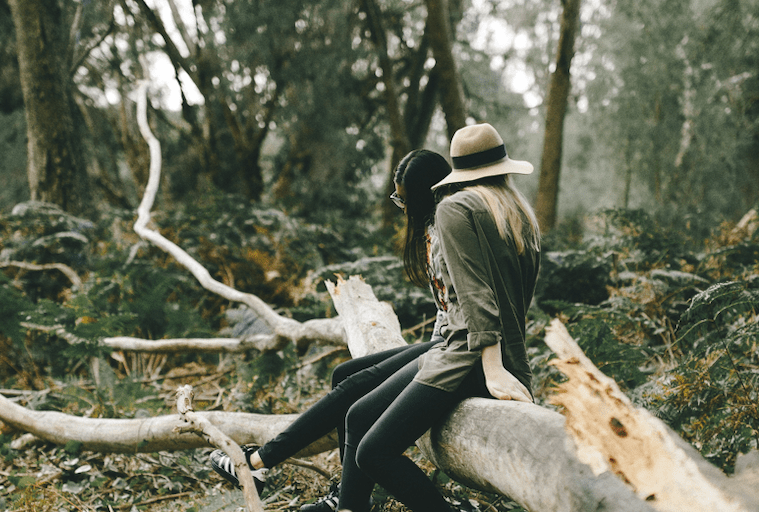
Sit spots are hot

Image from @henripham (courtesy of Unstack)

I’ve wanted to work “in nature” from about 5 years of age.

We have ALL the ID books – the what-is-this bird/fungi/lizard guides. Our family never book accommodation without searching for “eco-resort” first. We’ve enjoyed ceynote swims in Mexico, hiked to the snow line and our kids have portaged between Canadian lakes. My husband is a super keen catch-and-release fly fisher.

I’ve woken up after sleeping outdoors in a Kosciusko winter with a pillow-halo of ice. We hike in our nearby hills most days and we all have our favourite native birds, flowers and fungi. I consider myself to be about a 9/10 on the nature knower/lover scale, and yet……

Why has it taken 52 years to hear about sit spots !? I can only assume until now, you have never heard of them either…..

Sit spots are the OPPOSITE of what most people do in the bush. When I do a sit practice – I hear other humans coming a mile away. I can tell the angry ones coming from their pressured workplaces – they crash through the vegetation, yelling into their phones, not aware of their behaviour, missing interactions with species. A dog might run ahead – but they look down, their surroundings just wallpaper.

A sit practice is not like that. It’s a practice that is part of a suite of tools used for nature therapy. And nature therapy is HOT these days. It’s like being in a yoga class with a bunch of your best friends, rather than watching a yoga video. It’s immersive. It brings more calm AND at the same time as more concentration. It’s like therapy – only without the white boxy walls and stinging price tag…..

A sit spot is a place you go to regularly enough to develop an affinity for – a fondness. It’s your secret place, whether that is close like a backyard or a remote and pristine vista. There is a distinct emotional relationship between you and what’s around you. You know most or close to all the major species there (whether you know their formal names or not). You aren’t perceived as a threat – rather you become accepted as a natural part of that place. You have done the “dirt time” there.

Here are a few video resources that make it easy to learn the habit of sit spotting.

Nature Philosophy

Wild Earth

Sunshine Coast – Nature Weavers Earth School

Wild Sight

Rather than try to teach the details of how to do it here – I’m offering sit spot events in person. Be sure to follow this blog in future and my FB page Naturehood, Nurturehood for updates.

In the mean time – here are some basic tips.

S – S is for select. Somewhere close and familiar. Somewhere you like to be.

I – I is for individual. This is your place. Best to go alone.

T – Time. Give yourself at least 30 minutes of pure observation in a comfortable spot. (It can be quite hard to do.)

S – Suspend your judgement. You don’t have to DO anything. If this is too hard, you can sketch or journal, or stroll around a tiny bit. Get used to the feeling of freedom. How amazing it is to do NOTHING !

P – Plan to bring the right clothes, shoes, a drink or water. Plan NOT to look at your phone at all, except to set a timer.

O – O is for being open to anything. Perhaps you’ll be surprised to see a predatory bird, observe a wind direction, or see a too-close-a-reptile species you’ve never noticed before !

T – T is for talking it up ! Tell everyone that you do sits. Find a sit buddy or two and compare notes.

I’d love to hear how you feel.
Uncategorized

Australia needs a new seasons and cycles calendar – Part 1 – The story of the Indigenous calendar

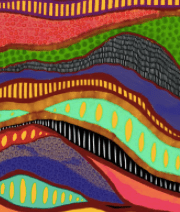
“Angwirri” 2021
by Frances Belle Parker
Yaegl Artist
Angwirri – means begin to talk in Yaygirr Language of Maclean, NSW.

As a child I’d heard the names of our local and regional indigenous areas. They had a magnificent rhythm to them…Bundjalung, Yuragir & Wiradjuri.

All I knew was that they were the names of vast expanses of land – National Parks. I might have had an idea that they referred to clans, but sadly, then – the peoples of these lands weren’t referred to by these titles.

I’m fortunate to have a strong connection to the stunning northern NSW Yaegl nation. My family ancestors had a peaceful, practical working relationship with original people since the 1850’s. Ancestors on both sides have woven into us habits and wisdom. When my Dad taught us to pull beach worms from the sand to use as bait to catch fish – I also learnt that he learnt this directly from local Elders.

I now express the greatest gratitude for being able to live on land of the Kaurna people of South Australia and I’m continuing to do as much “sorry” work as I can. This involves direct action such as understanding my story, inviting, donating, reading, learning, connecting, making mistakes and starting over.

There was a time – for almost a decade, where our family of 4 lived on the land of the Onghiaran people of Ontario (where the word Niagara comes from). It felt so incredible to find this out, but then so devastating to learn that the Onghiaran people (a “neutral” Iroquois tribe) last occupied the peninsula in 1641.

In Canada, humbling First Nation experiences gave us other insights into indigenous lives and their land. My husband secured a grape supply contract with the Osooyos Indians – an economic powerhouse of British Columbia tourism and agriculture. We witnessed the incredible Wiikwemkoong Pow-Wow on the unceded territory of Manitoulin Island. Recalling the deep sounds of huge drumming circles still makes me shiver.

We experienced Mexican Day of the Dead and US First Nation traditions. We ate moose. We heard prayers sung while salmon were pulled in and hit on the head from the Fraser River. We saw how human ceremony and rituals were inseparable from their surrounding biomes. It was an unsettling reminder how little we knew of our own first people. We realised Australians have much work to do. Although we are moving in the right direction, it’s still painful.

“Sorry” had been said by the Australian government while we were overseas. On our return, at my kids’ school assembly, the relief of hearing my first Acknowledgement of Country brought me to tears.

So, in the spirit of trying to find a way for us all to be together….

Knowing the indigenous name of each piece of the country is hardly new – but indigenous calendars are still unfamiliar to most. Our population might be diverse but our habits, observations and activity are still dominated by a predicable European calendar. 

In the country of the Adelaide Plains the Kaurna people have a seasonal calendar. In other parts of the country, the start of a season might be a star appearing in a certain part of the sky or a time to harvest a rich food source like eggs or fish. The hatching of dragonflies marks a seasonal shift in regional Western Australia. What a delight!

It’s time we learnt about these principles from those who have lived here sustainably for 50 000 years. We are slowly waking up and learning the truth of this land and how it operates. It is an opportunity AND privilege that we might learn about living well on this continent from people who have the oldest continuous culture on earth.

Crafting YOUR own calendar based on local wisdom is a great way to start. For e.g. my autumn to winter shift is marked by rain moths emerging from the ground. I know once they arrive, edible fungus will appear in the Adelaide Hills. I’m learning about what native birds come and go and when. Our walnut tree will be bare soon as the sulphur-crested cockatoos and their 7 calls (that I can detect) take their last meal at solstice.

So how might understanding these calendars benefit you?

  • Tracking the seasons will help you live with greater respect and integrity for Indigenous people (supporting reconciliation),
  • Understanding landscapes will help you become acquainted with your ecological neighbourhood and human community,
  • You will get to know the rhythm and flow of the year from the perspective of plants and animals (both introduced AND native), and
  • It’s a form of nature therapy providing positive mental health benefits.

Thinking of creating your own personal seasonal calendar? Winter solstice is THE PERFECT TIME…..

Let me know – I have courses teaching you how – starting in late June.

Click here to register…….

This post is in honour of National Reconciliation Week 2021 (May 27- June 3). Always was, always will be Aboriginal land.